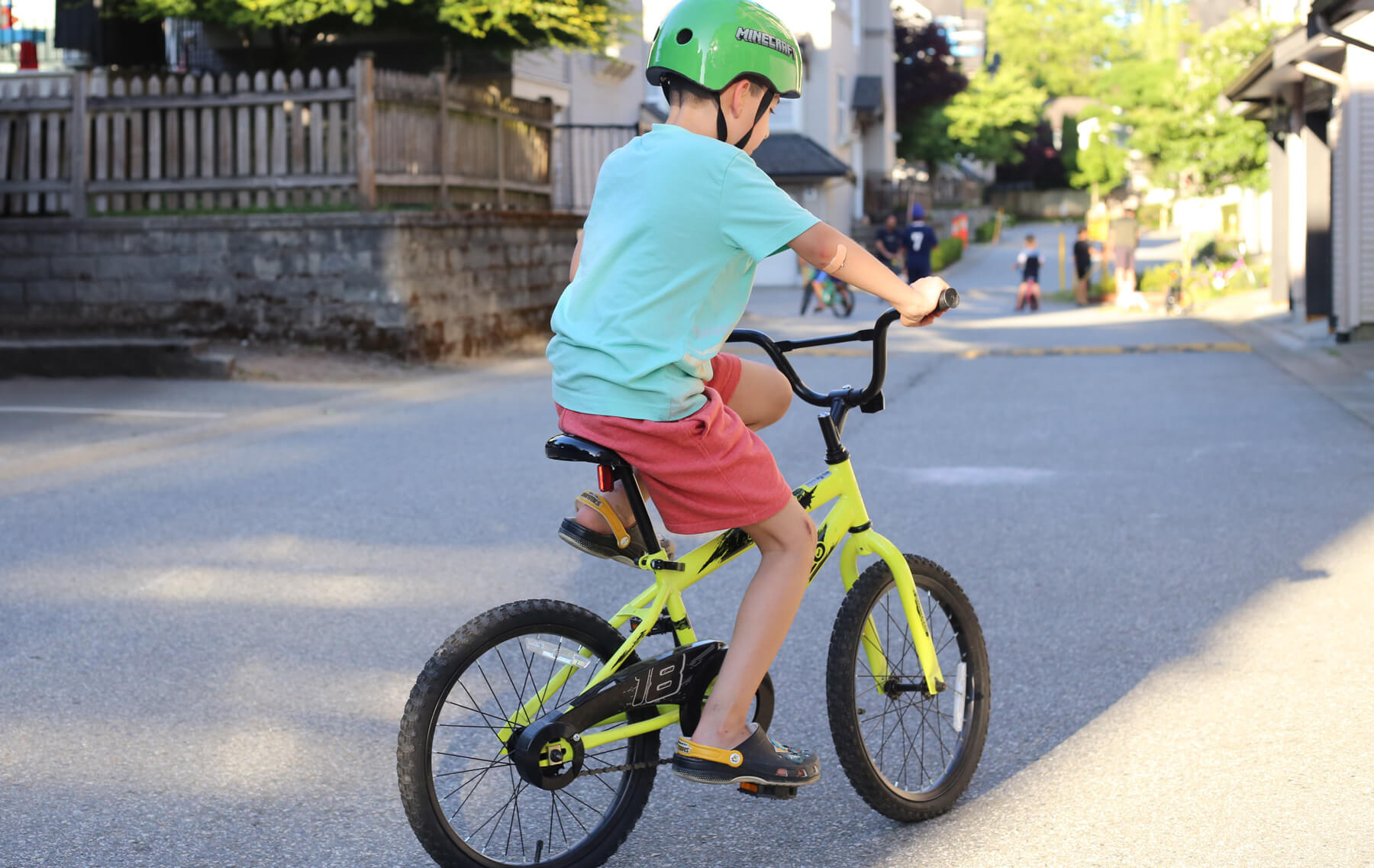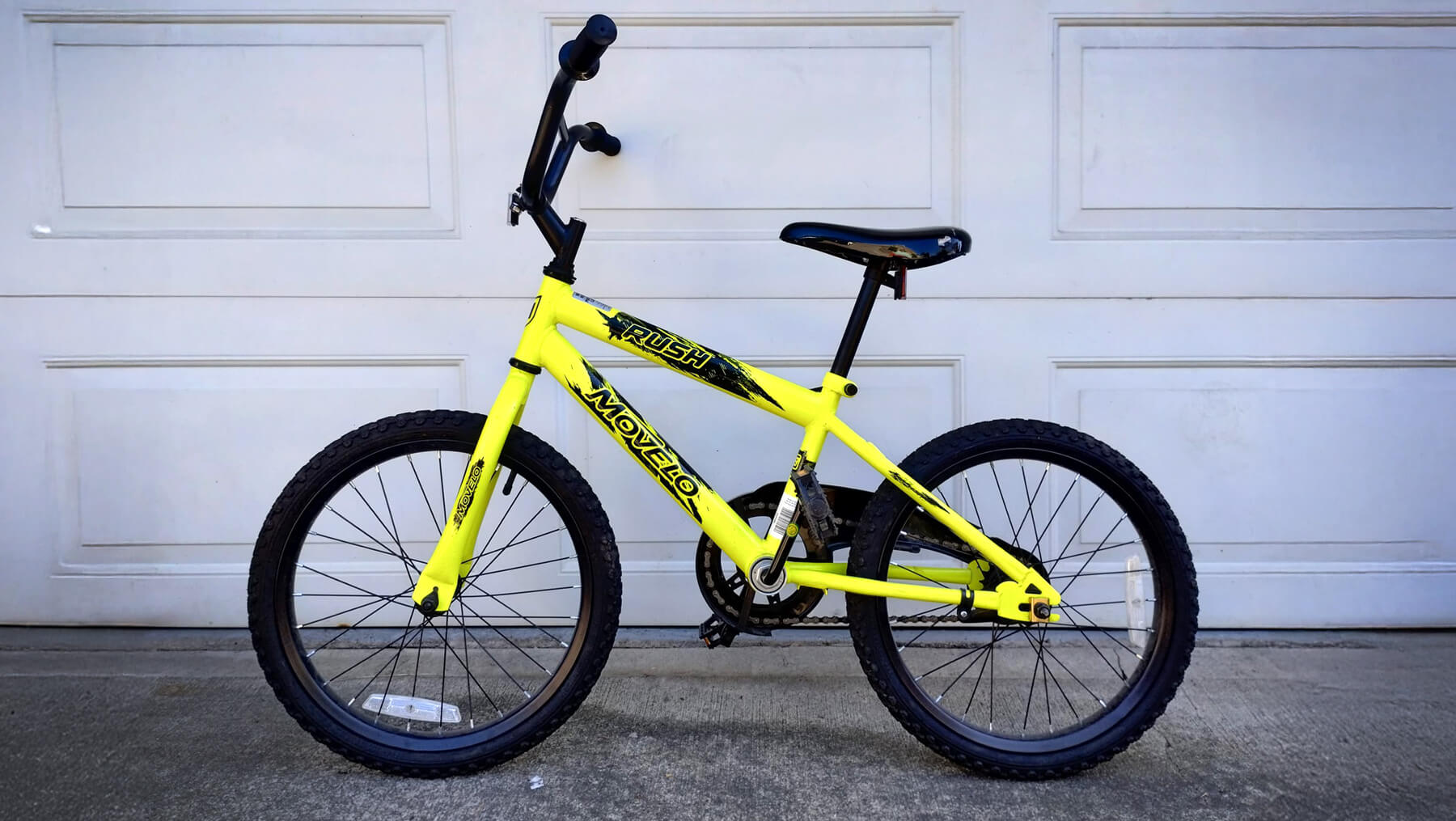

The following is a true story 🙂
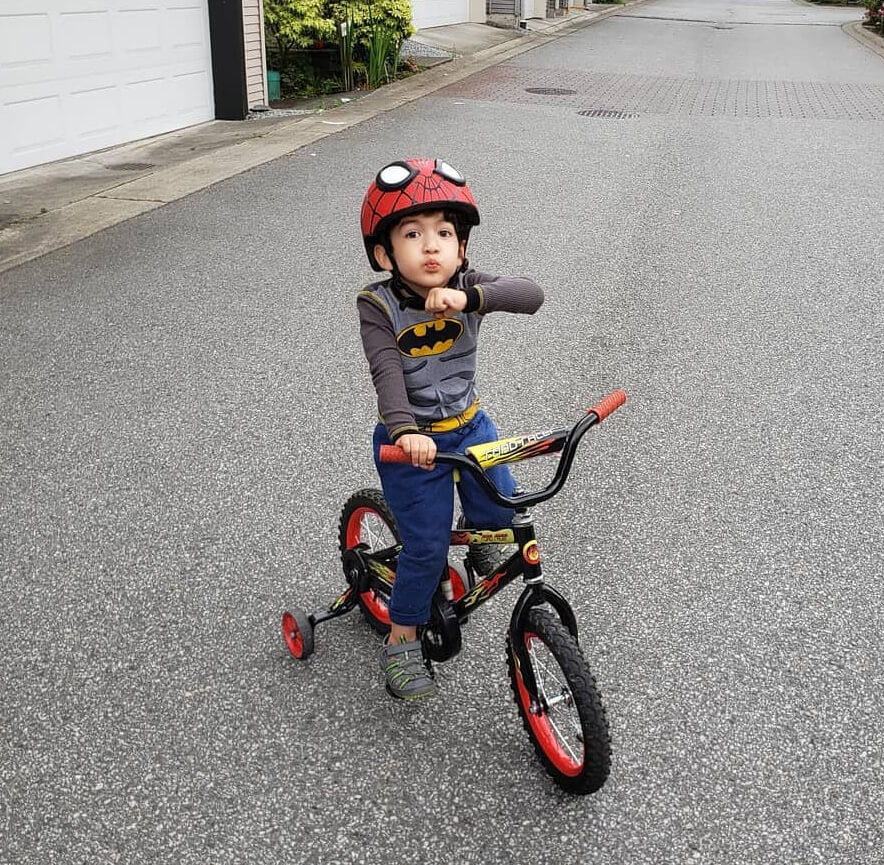
This is Daniel at the age of 5. At first, he was very excited and enjoyed riding his bike. But after a while, it was very hard to motivate him to practice. Most of the neighbourhood kids practised daily and were able to ride the bike without the training wheels within a year. But for Daniel, it was different.
He didn’t enjoy riding with training wheels because he felt slow. While his friends zipped around without the training wheels, he lagged behind—and slowly, he lost interest. Riding around the block was not easy for him, and he struggled going over the speed bumps and slopes. Sometimes he even felt embarrassed to ride while they were outside. He would rather run with joy beside them while they were on their bike. And though most of the time he could not keep up he still prefered that over ridign the bike. Over the next 2 or 3 years, he barely touched it. Eventually, he outgrew it, and we gave the used bike away.
When he turned 7, we got him a scooter—and he learned it quickly. Whenever his friends would ride their bikes around the block, he would join them on his scooter.
That gave us hope. So, we bought him a brand-new bike. But again, it mostly sat unused.
When No One’s Watching – Being attuned to your child’s unspoken feelings
It is spring, May 2025 and Daniel is now 8 years old. One afternoon I was a bit frustrated, I concluded that I had to work with him towards taking off the training wheels slowly:
I told him, “Daniel, you have one or two weeks to practice with the training wheels to build strength. Then we’ll take them off. Cause if you are not going to use it, we might as well give it away.”
He did not like it, but he agreed to practice. Observing him, I could see, Daniel didn’t like practicing in front of his friends who already knew how to ride their bikes. Though he never said it outright, I sensed he felt embarrassed—worried they might make fun of him or think he wasn’t as capable. Learning was already hard enough, and I didn’t want to add the pressure of judgment. I told him, “We’ll practice when your friends aren’t around. Just focus on the bike—not on what anyone might think.”
Stronger Than He Thought
To his surprise, when they eventually saw him trying, they didn’t tease him. One simply asked, “Are you still trying to learn how to ride a bike?” Another added, “It’s easy—I can show you how!”. What boosted his confidence even more was when he decided to go around half the block and back to avoid kids that were playing on one side, thinking he was doing the equivalent of 3 rounds when he did in fact 6 full rounds. And I told him: “See, you said to yourself you could only do 3 rounds and stopped because you thought you achieved your goal. But you got your math wrong and actually did 6 full rounds. You’re much stronger than you give yourself credit.”
The Day the Wheels Came Off
After a week of practice, Daniel looked at me and said:
“Daddy, take the training wheels off.”
“Are you sure?” I asked. “You can keep riding with them a bit longer.”
“No. Take them off,” he insisted.
So I did. Training wheels off. Helmet on. For support, I held the bike from the Handlebars and Saddle Rails while he was pedalling. We are halfway around the block and he shouts excitedly: “Daddy! I can ride the bike!”
“Not yet,” I replied. “I’m still holding on.”
Then I let go of the steering and guided just the seat with one hand to keep the momentum. That’s when I saw this tiny speedster—maybe 4 or 5 years old—Mashallah (may nothing spoil it)— buzzing past us on a bike without training wheels, like it was no big deal. He looked like a squirrel on espresso, staring at us as he was wobbling and shaking the handlebars like his life depended on it. I stared back for a few seconds.
Then it hit me—of course! Daniel was too stiff, riding like he was bracing for impact. I leaned in and said, “Daniel, you’re too stiff. Try wiggle the handlebars to help you balance.”
A few seconds here, a few there—I kept letting go.
And within 10–15 minutes, Daniel was riding. On his own.
That moment was emotional.
The Balance Between Help and Hindrance
The training wheels, meant to help him, had held him back. They made him slow. They stopped him from learning balance. It made me think:
What other “support wheels” are we putting on our kids that may be obstacles?
That first week, he fell three times from his bike and once from his scooter. Got three big scrapes. But he got up each time. Now, he’s riding free. And he did not quit.